The Long Twilight: Building an Outfit for a British Evening That Begins at Four
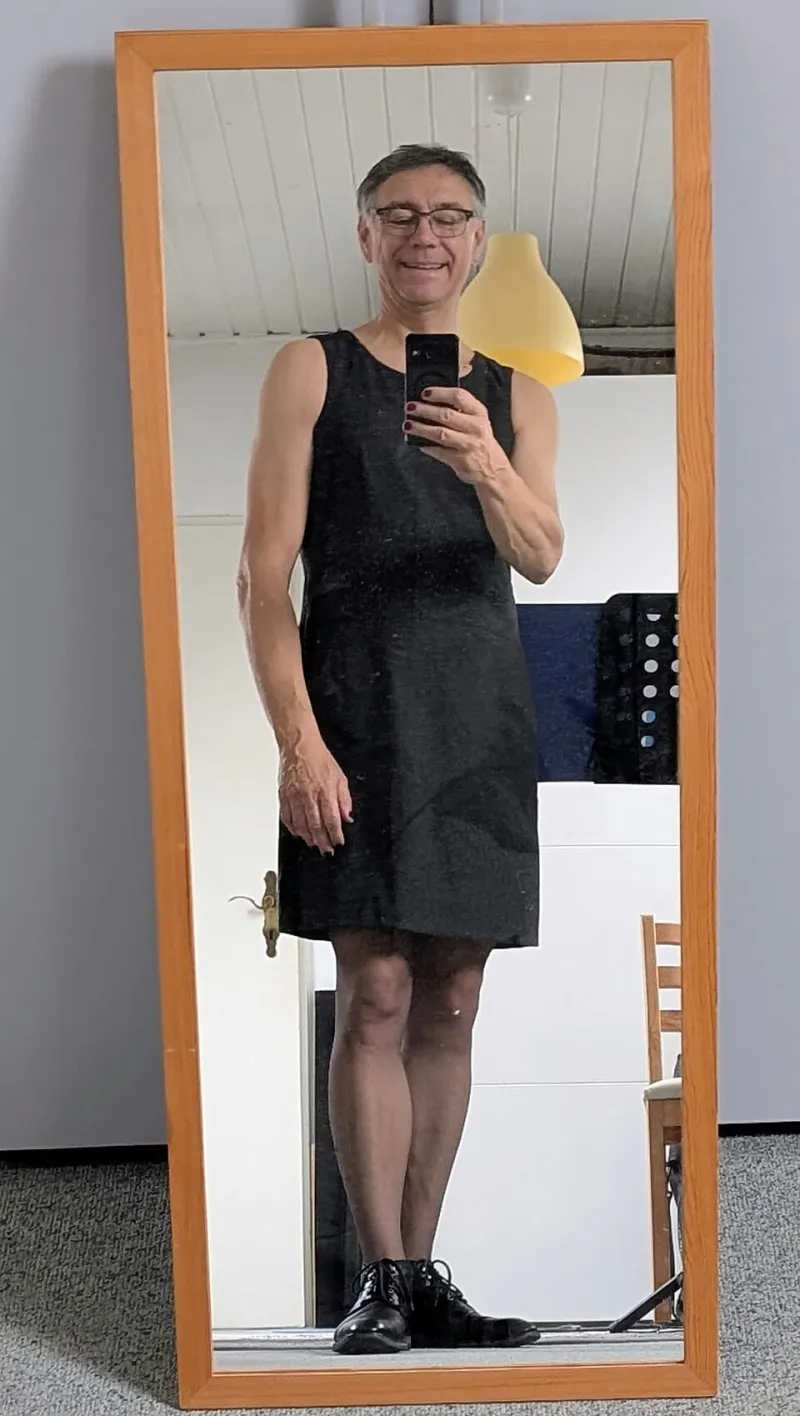
Photo: Elmschrat, CC BY-SA 4.0, via Wikimedia Commons
The British winter evening does not begin at six. It begins at four, when the light starts to leave the studio windows and the day still expects a certain polish. By five, the train carriage is overhead-lit and close; by six, the pub is warmer and dimmer; by seven, the pavement is black and wet underfoot. An outfit that only works in the first of those settings is not really working at all.
The Problem With Polish at Four O'Clock
A studio day has its own register. It favours a clean collar, a considered knit and a shoe that can be worn without apology. The difficulty is that the same outfit can look austere by early evening. A shirt that reads as crisp at four can read as stiff at seven, and a coat that looks smart in daylight can look formal in a pub. The answer is not to change everything at the end of the day. It is to build an outfit that can lose a layer, shift a neckline and carry its polish into the dark without insisting on it.
This is an opinion, but it is a practical one. The British winter transition is not a single climate. It is a sequence of small atmospheres, and the wardrobe should be able to move through them without a full costume change.
Collars That Hold Their Shape
The collar is the first thing the eye reads at the neck, and it is the first thing a coat can ruin. A narrow point collar in cotton poplin or a soft button-down in brushed cotton will hold its line under a jacket and still look relaxed when the jacket comes off. A band collar is useful under knitwear because it does not compete with the neckline; it gives a clean edge without the fuss of a spreading point.
Avoid the oversized, floppy collar that collapses under a coat and then looks unfinished indoors. If the collar cannot survive a scarf, a coat and a train seat, it is not the right collar for this season. The same applies to the shirt cuff: it should be neat enough to show beneath a knit sleeve but not so stiff that it feels like office uniform at eight in the evening.
Knitwear as a Middle Layer, Not an Afterthought
A fine merino or lambswool knit is the most useful thing in the winter wardrobe because it can be added or removed without destroying the line of the outfit. It should be thin enough to sit under a coat without padding the shoulders and warm enough to matter when the heating in the train is unreliable. A sleeveless knit is particularly useful over a shirt: it adds warmth at the core while leaving the arms free and the collar visible.
The mistake is to treat knitwear as the main event. A bulky cable knit under a tailored coat will make the wearer look like a parcel being carried rather than a person dressed for the evening. The middle layer should support the shirt and the coat, not compete with them. A cardigan worn open over a shirt, then buttoned under a coat, is a modest but effective piece of engineering.
Coat Length and the Pavement
Coat length matters more than it is usually given credit for. A coat that ends at the hip is practical for a short walk but can leave a long knit exposed and the legs cold. A coat that ends below the knee gives the outfit a second silhouette and protects the back of the legs from the pavement. For a British winter evening, the mid-calf or just-below-knee coat is often the most useful: long enough to look composed, short enough to clear steps and train seats.
Check the hem against the shoe. A long coat over a slim trouser and a leather shoe reads as deliberate; the same coat over a bulky trainer can look as though the wearer has borrowed someone else's outerwear. The dark pavement will show every mark, so choose a cloth that can take a little weather without looking ruined by the second winter. A dense wool or a wool-cashmere blend is more forgiving than a soft, loose weave that catches every drop.
Small Accessories, Two Readings
The accessories are where one outfit becomes two. A scarf at the neck can add colour and warmth on the street, then be removed in the pub to reveal a collar that was always there. Leather gloves should be slim enough to fit into a coat pocket without bulging; a silk square in the breast pocket can lift a plain coat without demanding attention. A small bag that works on the train and at the table is more useful than a large tote carried for the day and resented by the evening.
Jewellery should be chosen for the same reason. A pair of small earrings or a simple chain can read as studio-appropriate at four and quietly evening-appropriate at seven. The aim is not to look dressed for a party at the end of the working day. It is to look as though the day has been considered as a whole.
The Test at the Door
Before leaving, stand at the door in the full outfit, with the coat on and the scarf in place. Then remove the scarf and open the coat. If the outfit still looks resolved, it will survive the train and the pub. If it only works with everything fastened and every layer in place, it is too brittle for a British evening. The best winter outfits are not the most elaborate. They are the ones that can be subtracted from without losing their shape. That is the quiet discipline of dressing for a day that ends in the dark.