Stand, Roll and Latch: A Studio Guide to the Coat Collar
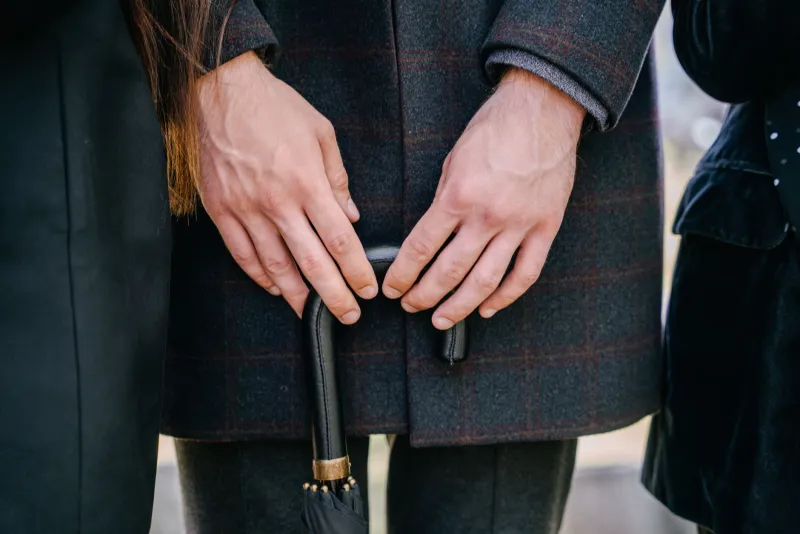
At the neck, a coat stops being an idea and becomes a piece of equipment. The cloth may carry the colour, the shoulder may carry the line, but the collar carries the weather. In a British November, a coat is asked to manage drizzle at a bus stop, a gust at a railway platform and the sudden warmth of a shop or carriage. The collar is the part of the garment that negotiates all three, and it deserves judgement before the cloth has had a chance to charm.
The Stand: Height, Shelter and the Shape of the Neck
The stand is the upright portion of the collar that rises behind and beside the neck. Its height is the first practical measurement to read. A very low stand leaves the neck exposed and invites rain to travel downward; a very high stand can feel enclosing and may crowd a scarf or a hood. Between those extremes sits the useful range for British conditions: high enough to break the wind at the throat, low enough to allow a knitwear collar to sit without competition.
In the studio, we look at the stand in profile as well as from the front. A stand that curves too sharply away from the neck creates a gap through which cold air passes; one that sits too close can press against a shirt collar and distort it. The correct stand follows the neck without gripping it. When the coat is fastened, the wearer should be able to turn the head without the collar dragging at the shoulders. This is a small test, but it reveals whether the collar has been cut as a working part or merely as a decorative edge.
The Notch and the Roll: Where the Collar Learns to Sit
On a tailored coat, the notch is not simply a stylistic mark. Its shape and depth affect how the collar rolls over the lapel and how the whole neckline lies when the coat is open or closed. A shallow notch can make the collar sit flat and stiff; a deeper notch allows a more generous roll, which in turn lets the collar settle over a jacket or a heavy sweater.
The roll is the curve of the collar as it turns from the stand into the fall. A good roll should look as though it has been encouraged rather than forced. If the collar breaks sharply at the seam, it will tend to stand away from the neck at the back and leave a channel for wind. If it rolls too softly, it may lack the structure to hold its shape under rain. The studio test is simple: fasten the coat, stand in front of a mirror and look at the collar from the side. The roll should describe a continuous curve, not a hinge.
Notch shape also matters when a scarf is added. A narrow notch can pinch a bulky scarf; a wider opening gives the scarf room to sit without pushing the collar out of position. In a climate where a scarf is often carried rather than worn, the collar must work both with and without one.
The Throat Latch: A Small Closure with Consequence
The throat latch is easily overlooked and disproportionately useful. A single button or hook at the front of the collar can transform a coat from a fair-weather garment into one that closes against a raw wind. In the fitting room, the latch should be tested with the collar in its natural position, not pulled forward to meet the button. If the collar has to be distorted to fasten, the latch is in the wrong place or the stand is the wrong height.
A well-placed latch allows the collar to close cleanly at the throat while leaving enough room for a shirt collar or a fine knit. It should not press against the windpipe or create a hard point under the chin. On a British coat, the latch is particularly valuable on days when rain arrives sideways and a scarf alone is not enough. It is a small piece of engineering, but it changes the way the neckline behaves in weather.
The Fitting Room Test: Collar Over Knitwear
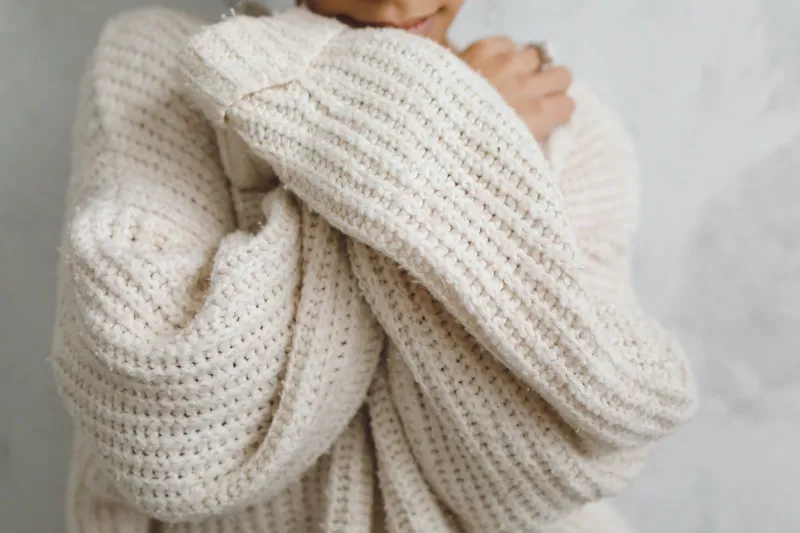
Most coat collars are judged over a shirt, but most British winters are lived in knitwear. The fitting room should therefore include a sweater, ideally one of the weight the coat will actually be worn with. A collar that sits perfectly over a shirt may ride up over a thick crew neck or leave a gap at the back over a fine merino. The aim is not to accommodate every possible layer, but to identify the layer the coat will meet most often.
With the knitwear in place, fasten the coat and check three points: the back of the neck, the sides of the throat and the front opening. The collar should rest on the knit rather than float above it, and it should not push the knit down into a fold. Turn the head left and right. If the collar moves with the head, it is too tight; if it stays rigid while the neck turns freely, it may be too loose. A useful collar sits quietly between the two.
Judging the Neck Before the Cloth
Cloth is persuasive. A good tweed or a dense wool can make almost any coat feel desirable in the hand, and the eye is naturally drawn to colour and texture. But the neckline is where the coat will be judged daily, in weather and in motion. Before the cloth is allowed to persuade, the collar should be read as a working surface: the stand high enough to shelter, the notch shaped to let the roll sit, the latch placed to close without strain, and the whole neckline calm over the knitwear it will actually meet.
In a British wardrobe, the collar is not a detail to be settled at the last fitting. It is the first line of defence, and the most honest report on how the coat will behave once it leaves the studio and meets the sky.