When the Body Folds: A Case for the Seated Fitting
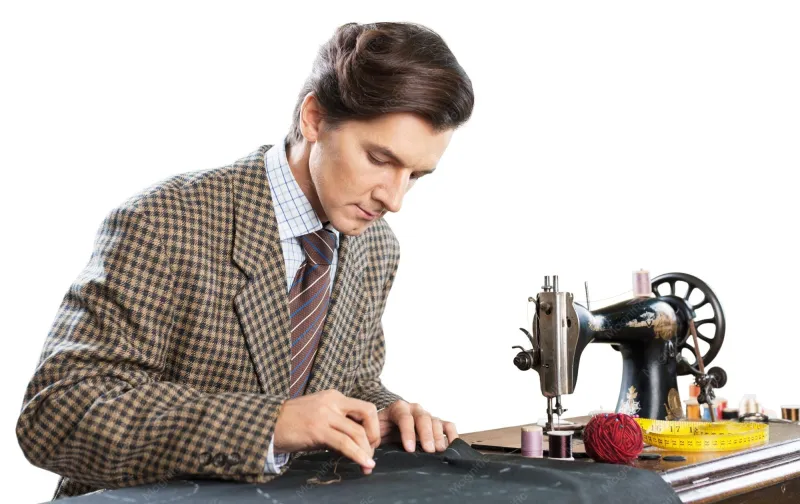
Photo: tailor fitting seated client chair studio garment assessment, via img.freepik.com
Fitting rooms are designed around the standing figure. The mirror is vertical, the posture is encouraged upward and the eye is trained to judge line, length and balance from the front. This is useful, but it is only half the evidence. A British day rarely remains upright. It is spent in train seats, office chairs, car journeys and pub benches, and each of these positions changes the way a garment behaves. The seated fitting should not be treated as a comfort afterthought. It is a separate structural audit, and it often reveals more than the standing view.
The Standing Bias
A standing body presents cloth in its most flattering arrangement. The waistband sits where it was designed to sit, the jacket hem hangs clear of the lap and the sleeve falls cleanly to the wrist. The mirror rewards this vertical arrangement, which is why so many garments are approved while standing and then quietly fail in use. When the body folds, the geometry changes. The pelvis rotates, the spine rounds, the thighs move toward horizontal and the shoulders come forward. Cloth that was hanging now has to negotiate compression, tension and recovery. A garment may be the correct size and still be the wrong shape for a seated life.
The seated fitting is therefore not a test of whether a garment feels soft. It is a test of whether its internal structure, cut and cloth can accommodate a change of posture without asking the wearer to manage them all day.
What the Waistband Admits
The waistband is the first place to look. Seated, it either digs, gaps, twists or remains quietly in place. A waistband that cuts into the midriff when sitting will do so on every commute, and no amount of standing approval will make that acceptable. A back waistband that pulls away from the body when seated will admit cold air and expose the shirt or knit beneath. A front closure that strains at the fly or placket is not merely a fit issue; it is a sign that the rise and the seat have not been cut for the way the wearer will actually sit.
The check should be made after five minutes, not five seconds. Perching on the edge of a chair does not reproduce the problem. The wearer should sit back, breathe normally and let the garment settle.
Rises and the Geography of a Chair
Trouser rise behaves differently according to the chair. A low pub bench, a bucket-shaped train seat and a firm office chair each place the hip and thigh at a different angle. A high rise may fold into the lap; a low rise may slip at the back. The useful question is not whether the rise is high or low in the abstract, but whether it preserves coverage and ease when the body is folded. The lap should not be a site of tight horizontal strain. Pockets should lie flat rather than gaping open. The back waist should remain close enough to the body to do its work.
Car journeys add another dimension because the legs are often raised and the torso is turned. A garment that passes the office-chair test may still fail behind the wheel if the rise is too short or the seat too close.
Jacket Hems and the Collar's New Angle
A jacket hem is easy to judge while standing and harder to judge while seated. In a chair, the front panels may part, bunch or collapse into the lap, while the back hem rides up or becomes trapped beneath the wearer. The vent, if there is one, should open without tearing at its top stitch and should close again when the wearer stands. The collar also changes angle. A collar that sits cleanly on a standing neck may press against the throat when the shoulders round. The wearer should turn the head, look down and lean forward. If the collar restricts these ordinary movements, the jacket is not yet resolved.
Sleeves Under Load
Sleeve length is usually assessed with the arm hanging. Seated, the arm bends and the sleeve must negotiate the elbow and forearm. A jacket sleeve that ends perfectly at the wrist bone while standing may retract when the arm is bent, exposing the shirt cuff or leaving the wrist cold. A sleeve that is too long may bunch heavily at the forearm and interfere with writing, typing or holding a phone. The seated test should include hands resting on the lap, reaching forward and, where relevant, holding a steering wheel. The shoulder should not pull, and the cuff should not swallow the hand.
A Seated Checklist
A practical studio checklist is straightforward. Sit for at least five minutes in the clothes and layers intended for use. Where possible, test more than one chair: a firm desk chair, a low bench and a soft train-style seat. Check the waistband for digging, gaping and twisting. Check the back rise when leaning forward. Check the lap for tight folds and gaping pockets. Check the jacket hem, vent and collar through a normal range of movement. Check the sleeves with the arms bent and reaching. Finally, stand, walk and sit again. A good garment should recover its shape without the wearer having to tug it back into place.
Cloth and Recovery
The seated fitting also tests cloth. Wool, linen and cotton each crease differently at the lap and knee, and some recover more readily than others. A garment that looks exhausted after a short journey may not be the wrong size; it may be the wrong cloth for the life it is being asked to lead. In a British winter, where a seat may be warm, damp or draughty within the same hour, recovery matters as much as drape. The seated view shows which cloths keep their composure and which surrender to the chair.
Standing gives the silhouette. Sitting gives the contract. A garment should pass both before it leaves the studio, because the mirror is only one seat in the room.