Where to Feel the Cloth: Six Mill Shops Reached by Rail
There is a limit to what a swatch can do. A square of coating photographed under studio light will tell you its approximate colour and almost nothing about its weight, its bias, its willingness to hold a lapel. Serious wardrobes are still built, in part, in rooms that smell faintly of lanolin and machine oil, where the cloth is stacked and you are permitted to pick it up.
What follows is not a shopping list in the promotional sense. It is a short itinerary for a day out, chosen because each destination offers something distinct — a weaver, a remnant bin, a gallery, a working loom — and because each is reachable without a car. Mill shops keep mill hours, so confirm opening times before you buy a ticket; a few close at weekends and many shut for lunch.
Salts Mill, Saltaire
The Airedale line puts you at Saltaire station, and the mill — built in 1853 and now a listed cathedral of Yorkshire industrial ambition — is a few minutes' walk along the canal. Do not come expecting bargain bins. Come for context: vast rooms, excellent light, a bookshop, home textiles and the 1853 Gallery, where the Hockney holdings are worth the trip alone.
Best for: colour and proportion. Seeing how a palette behaves across an entire floor, at scale, in daylight. It is also the most civilised place on this list to take a non-sewing companion.
How to shop it: treat it as research. Note the shades that draw you, then look for the cloth itself elsewhere.
Sunny Bank Mills, Farsley
A working mill complex turned cultural site, with galleries, resident studios, a café and periodic sales of work by the makers who occupy it. The draw here is proximity to people who make: you can see finished cloth, samples and small-batch production in the same afternoon.
Best for: meeting makers and understanding process. Sample sales are irregular, which is part of the point — sign up to the mill's notices rather than turning up hopeful.
How to shop it: arrive with questions rather than a shopping list. Ask what weight the cloth is, what it was woven for, and whether the maker has more at home.
Fabworks Mill Shop, Dewsbury
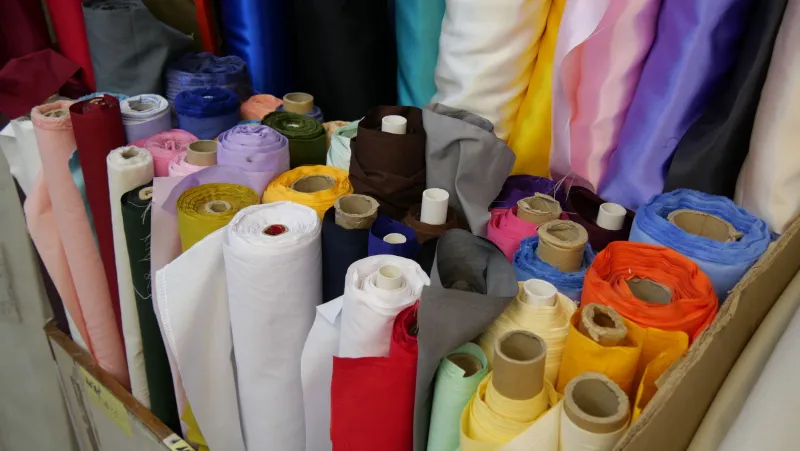
This is the practical heart of the list: a mill shop in the proper sense, selling cloth by the metre and remnants by the bag. Suitings, coatings and shirtings sit alongside the unexpected, and prices reward those willing to work with what is there rather than what they had in mind.
Best for: volume and discovery. If you sew, this is where a winter coat begins. If you do not, it is where you learn what a good cloth actually costs.
How to shop it: bring a bag, a notebook and a firm budget. Weigh the fabric in your hand, hold it to the window, and ask about shrinkage and finishing. Mill lighting flatters everything; daylight does not.
Abraham Moon, Guiseley
The Guiseley mill has been weaving tweed since the nineteenth century, and its shop is the cleanest introduction to that cloth you will find. Throws, scarves, accessories and lengths, plus ends of lines that rarely reach the website.
Best for: tweed, and for seeing how a single cloth reads across a hundred articles. Good for gifts, better for learning how a colour behaves in Yorkshire light.
How to shop it: buy the length rather than the finished object if you have a maker. Ask what the cloth was woven for; suiting tweed and upholstery tweed are not interchangeable.
Whitchurch Silk Mill, Hampshire
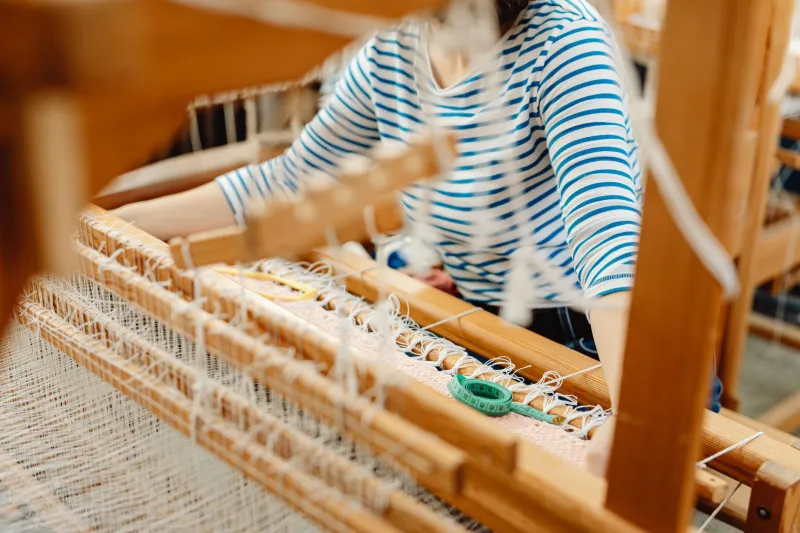
The southern entry on this list, and a change of register entirely. A working silk mill on the River Test, with looms in operation and a shop selling silk and ribbon by the metre. Small, specific and genuinely instructive.
Best for: linings, ribbon, occasion cloth and the education of seeing silk woven rather than printed. Check which days the looms run; the visit is better when they do.
How to shop it: buy less than you think. Silk is unforgiving of a hesitant pattern choice, and a metre of the right ribbon will outlast a dress length of the wrong one.
Trefriw Woollen Mill, Conwy Valley
The Conwy Valley line is one of the great small journeys in Britain, and Trefriw sits at the end of it, in a village that has been weaving since the nineteenth century. Welsh tapestry blankets, wool cloths and the machinery that makes them.
Best for: weight and warmth. Nothing on this list better demonstrates the difference between a cloth that insulates and a cloth that merely looks substantial.
How to shop it: travel light, check the weather, and allow time for the walk. The cloth will make more sense once you have felt the damp.
How to shop a mill shop without drowning
A few studio habits make the day more useful than overwhelming.
- Go with one garment in mind. A coat, a shirt, a pair of trousers. Ambition multiplies against a table of cloth.
- Handle before you commit. Scrunch it, let it fall, watch whether it recovers. Drape is information.
- Buy the remnant, not the dream. A metre and a half of something excellent will be worn. Five metres of something speculative will not.
- Record the details. Weight in grams per square metre, fibre content, washing guidance, and where you bought it. You will not remember in February.
- Set a ceiling before you arrive, and treat the train fare as part of the cost.
A wardrobe assembled this way accumulates slowly and oddly, which is rather the point. The garment you make or commission from a cloth you chose by hand carries a memory of the place it came from — the cold platform at Saltaire, the noise of the looms at Whitchurch — and that memory tends to keep it in use long after the season that inspired it has passed.